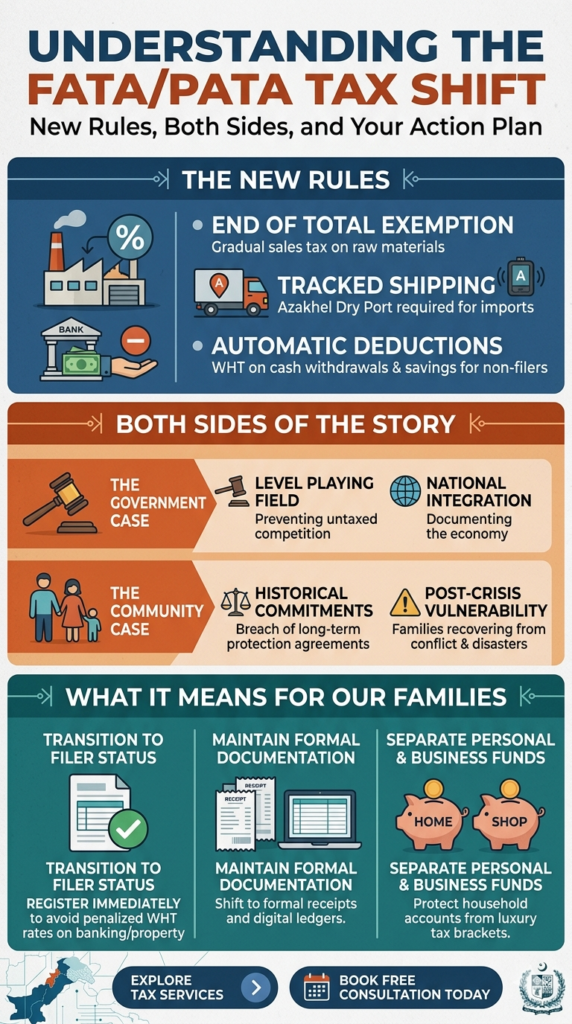
The FATA/PATA Tax Shift: The New Rules, Both Sides of the Story, and What It Means for Our Families
Change is incredibly hard, especially when it directly impacts your livelihood and household budget. For decades, FATA, PATA, and the Malakand Division stood as a unique, tax-free zone. This wasn’t just a legal loophole—it was a status deeply rooted in the history of the old Swat State merger of 1969 and the tribal areas’ constitutional rights.
But today, that reality is shifting. After a multi-year grace period following the 2018 merger, the federal government is actively enforcing strict new tax laws.
For local families, traders, and shopkeepers, this feels incredibly abrupt. After enduring years of militancy, military operations, and devastating floods, our community is exhausted, and the financial anxiety is completely understandable. Yet, since the new system is being actively rolled out, navigating this transition with clear legal facts is the only way to protect what you have built.
The New “Extra Rules”: What Is Happening on the Ground?
The transition isn’t just about standard income tax. The Federal Board of Revenue (FBR) has rolled out specific, rigid rules to collect revenue and eliminate non-compliance:
- The End of Total Industrial Exemption: The absolute tax exemption for factories in FATA/PATA is gone. A gradual sales tax is now applied to industrial raw materials.
- Tracked Shipping (The Azakhel Rule): Goods imported for tribal factories can no longer move freely. They are tracked electronically and must pass through the Azakhel Dry Port to ensure they aren’t sold in other settled cities.
- Strict Verification for Imports: Factory owners can no longer use simple post-dated cheques to avoid import taxes. They must provide verified proof within six months that the materials were actually utilized inside the tribal areas.
- Automatic Bank Deductions: For regular citizens, the change hits right at the bank counter. Withholding taxes (WHT) are now automatically deducted from non-filer banking transactions, cash withdrawals, and savings accounts.
Both Sides of the Story: Understanding the Shift
To protect your interests, it is crucial to look at this economic shift from both sides to understand why it’s causing such a stir.
1. The Government’s Perspective (The Case for Taxation)
From a federal standpoint, integrating the region into the national tax net is seen as essential for country-wide economic balance:
- Level Playing Field: Preventing untaxed industrial goods from entering mainland markets protects settled-area manufacturers from unfair competition.
- Documenting the Economy: Tracking wealth and supply chains helps curb smuggling, under-reporting, and undocumented wealth blocks.
- National Integration: Eradicating dual-system governance aligns the region with federal economic frameworks to fund infrastructure and public services.
2. The Local Community’s Perspective (The Case for Relief)
From the ground level, local traders and residents face immediate financial strain:
- Historical Commitments: The sudden shift feels like a breach of the original merger agreements that promised long-term economic protection.
- Post-Crisis Vulnerability: Families are still recovering from decades of regional instability, displacement, and severe climate disasters.
- High Cost of Compliance: Small traders lack the digital literacy, accounting infrastructure, and capital to manage complex federal filing systems, creating a fear of local capital flight.
What This Means For Your Family & Business
Navigating the FBR’s complex frameworks alone can lead to heavy penalties, frozen accounts, or overpayment of taxes. To shield your household and business, consider these immediate steps:
- Transition to Filer Status: Staying a non-filer exposes you to heavily penalized, doubled withholding tax rates on banking, property, and vehicle transactions. Registering as a tax filer immediately minimizes these automatic deductions.
- Maintain Formal Documentation: Shopkeepers and small traders must shift to keeping formal receipts, digital ledgers, and clear bank statements to protect against arbitrary tax assessments.
- Separate Personal and Business Funds: Avoid running commercial shop revenues through personal household bank accounts to prevent triggering high automatic luxury tax brackets.
- Identify Valid Exemptions: Certain localized retail transactions and specific micro-industries still qualify for lower transitional rates or relief.
Justice Begins With The Right Counsel
You do not have to navigate these complex FBR regulations alone. Protecting your hard-earned assets requires proactive legal planning and compliant structuring.
Whether you are a factory owner adjusting to the new import rules or a local business owner looking to protect your bank accounts from automatic deductions, we are here to help.
👉 [Explore Our Corporate & Tax Services]
👉 [Book Your Free Consultation Today]
FATA PATA tax shiftFBR rules FATA PATAMalakand Division tax lawsSwat tax exemption status