
The law dictates that all custody decisions must serve the “best interests of the child.” Yet, a profound chasm separates this noble legal theory from the grim, chaotic reality of our courthouses. When families look for a best lawyer or a good lawyer to navigate a bitter split, they are often searching for total legal victory. However, an experienced family advocate knows that the physical environments where these life-altering verdicts unfold remain inherently hostile to young, developing minds.
Particularly in regions like the Malakand Division, family courts frequently function as arenas of secondary trauma. Systemic administrative delays, high-pressure environments, and deeply entrenched “family honor” mindsets inflict severe, lasting emotional and psychological damage on children. By forcing vulnerable kids to navigate overcrowded corridors, witness unbridled adult hostility, and endure agonizing hours of waiting, the legal system permanently fractures their well-being. Dealing with this crisis requires an urgent, uncompromising shift toward a child-centric, trauma-informed infrastructure that treats a child’s physical and mental health as the primary focus over rigid legal proceduralism.
1. The Courthouse Corridor: An Unregulated War Zone for Little Sponges
Whether a custody dispute is unfolding at a local district court level or has escalated as a critical appeal to the High Court (Dar-ul-Qaza) in Swat, the physical atmosphere remains a volatile pressure cooker of human anguish. For a young child, entering these spaces triggers an immediate, overwhelming sensory assault.
[The Bitter Corridor] ──► Claustrophobic congestion and deafening noise
                       ──► Adults weeping and shouting in tight corners
                       ──► Intense police and armed security presence
                       ──► A vulnerable child sitting in the middle, absorbing the fear
Children are never passive bystanders in these spaces; they are psychological sponges:
- The Toxic Atmosphere: Court corridors in busy regional centers are dense with aggressive legal posturing, sobbing parents, and intimidating security personnel.
- Unfiltered Aggression: Children are routinely exposed to vitriolic verbal assaults, glaring, and physical altercations breaking out between opposing litigants in public waiting zones.
- The Copycat Phenomenon: Children are natural mirrors. When repeatedly exposed to unregulated, hostile adult conflict, they internalize it. They subconsciously normalize aggression, manipulation, and intimidation as the standard tools for handling human relationships.
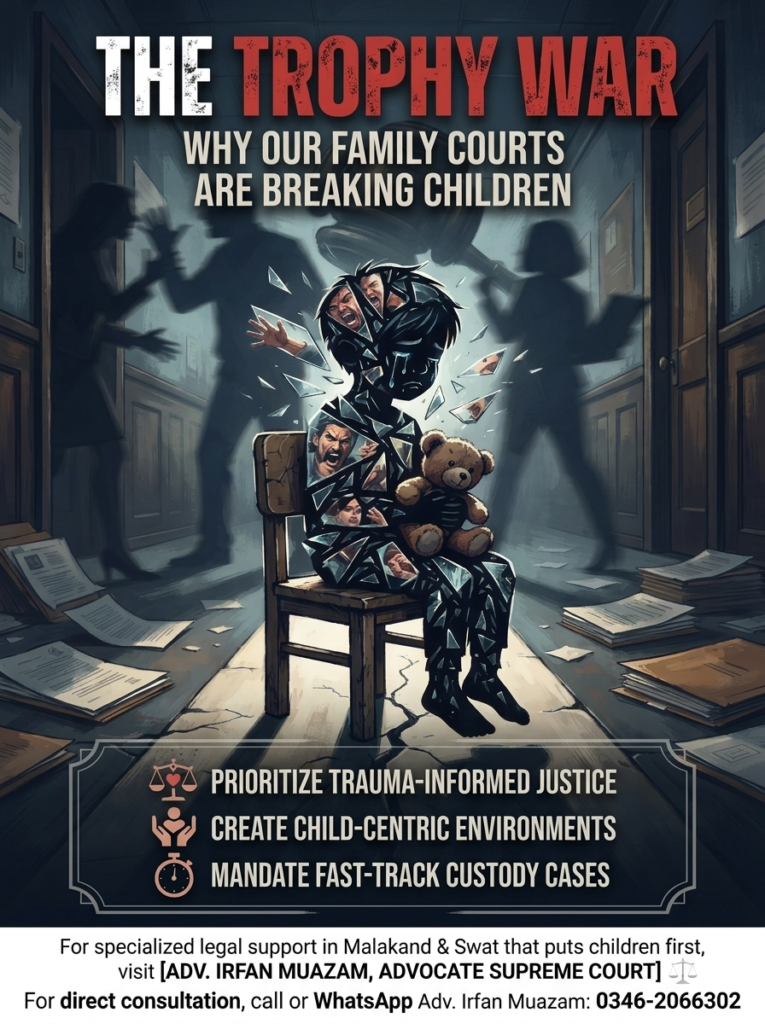
2. A Child’s Body in Crisis: The Hidden Physical and Psychological Toll
An educated, holistic view of child development reveals that the intense pressure of court proceedings does not merely stress a child’s mind—it actively degrades their entire physical biology and immune system.
| Dimension of Health | Immediate Impact of Court Pressure | Long-Term Pathological Consequences |
|---|---|---|
| Physical Well-being | Somatic stress induced by hours of waiting, sleep deprivation, missed meals, and sustained adrenaline spikes. | Chronic migraines, gastrointestinal disorders, a compromised immune system, and developmental stunting. |
| Psychological Stability | Profound fear of abandonment, debilitating anxiety, and acute cognitive dissonance. | Clinical depression, chronic panic disorders, severe trust deficits, and emotional detachment. |
| Social Adaptation | Internalization of manipulation, deceit, and systemic hostility observed in court corridors. | Academic regression, schoolyard alienation, and the replication of toxic relationship patterns in adulthood. |
3. Four Hours of Agony: The Institutional Cruelty of Systemic Delays
The wheels of justice grind slowly, and family court dockets across Pakistan are notoriously choked with immense backlogs. While a four-hour delay is a mere administrative annoyance for an adult, it constitutes a prolonged, agonizing psychological torment for a child.
During these endless hours of unstructured waiting, children are suspended in a state of paralyzing hyper-vigilance. This structural neglect completely disrupts basic biological rhythms—forcing children to miss school, skip meals, and lose sleep. They are left physically depleted and emotionally defenseless before their legal interviews or parental visitations even commence.
4. No Swings, No Privacy, No Dignity: The Erasure of Childhood
The most glaring architectural failure of the modern courthouse is the complete absence of child-centric design. Courthouses are constructed by adults, for adults, completely ignoring the fundamental biological and emotional needs of a child.
- The Stolen Right to Play: Play is not a luxury; it is a child’s vital tool to decompress, process trauma, and vocalize unexpressed anxiety. Forcing a child to sit immobilized on a hard wooden bench for hours strips them of their natural coping mechanisms.
- The Spectacle of Public Visitation: The total absence of private, tranquil meeting rooms transforms parent-child reunions into embarrassing public spectacles. When a child meets a non-custodial parent in a chaotic hallway, intimate bonding is impossible. Emotional conversations and tearful goodbyes are laid bare before a crowd of total strangers, destroying any semblance of organic family connection.
5. Five-Minute Justice: Drowning Judges and Assembly-Line Verdicts
The institutional failure deepens when examining the bench. In theory, child custody disputes demand extreme emotional intelligence, profound patience, and a meticulous evaluation of family dynamics. In reality, judges are drowning under an unsustainable mountain of pending files.
In overburdened regional legal systems, a single family court judge often faces a crushing daily cause list of 50 to 60 cases. This reduces the time allocated per family to less than five minutes.
50+ Cases a Day ──► 5 Minutes Per Case ──► Assembly-Line Decisions ──► Deeply Damaged Kids
Justice at this speed becomes a hurried assembly line. Judges simply lack the temporal luxury to identify subtle signs of parental alienation, manipulation, or psychological coercion. When a judge needs to interview a child to ascertain their custody preference, the process is compressed by the ticking clock and the restless crowd waiting outside. Instead of a relaxed, therapeutic setting, the child is brought into a formal, intimidating room. Under extreme time pressure, the judge is forced to ask blunt, terrifying questions like “Which parent do you choose?” This overt pressure induces immediate panic, forcing the child to repeat whatever script was coached into them by the custodial parent.
6. Through the Lenses of a Father, a Jurist, and an Advocate
To truly understand the depravity of this system, we must look through three distinct lenses simultaneously. When we merge the fierce protective instinct of a father, the analytical strategy of a lawyer, and the holistic vision of an educated advocate, the truth becomes undeniable: our current family court system is committing institutional child abuse.
- The Father’s Grief: As a father, watching your child being dragged into a legal tug-of-war is agonizing. You do not view your child as a legal asset or property; they are a fragile human soul who requires absolute emotional security. It is heartbreaking to witness both parents engage in a scorched-earth campaign, dragging the child through the mud like a trophy to be won, rather than a human being to be protected. A true parent desires for their child to feel the secure love of both parents, not to be a prize used to inflict defeat upon an ex-spouse.
- The Jurist’s Self-Correction: Through the lens of an enlightened legal practitioner, the traditional legal system is fundamentally flawed for family disputes. The adversarial model is inherently binary—it is designed to produce a winner and a loser. To achieve victory, lawyers are trained to demonize the opposing side. In family law, this “win-at-all-costs” ethos reduces a living child to a piece of disputed furniture. Strategic delays and endless motions are weaponized to exhaust the other parent, completely ignoring the fact that these delays steal years of a child’s irreplaceable developmental window.
- The Educated Advocate’s Verdict: An educated, compassionate view of society demands an immediate structural overhaul. If a legal team “wins” a custody battle but delivers a child who is traumatized, anxious, and physically compromised, then the entire legal system has failed miserably. Finding a good lawyer means finding a professional who recognizes that a child’s mental health must be protected at all costs during litigation.
7. The Human Blueprint: A Sane Path Forward for Our Courts
To transition from an arena of trauma to a sanctuary of healing, family courts across Dir, Swat, and Malakand must adopt a trauma-informed infrastructure immediately:
- Evict Visitations from the Courthouse: Parent-child visitations must be entirely banned from taking place within court buildings. These meetings should be relocated to neutral, tranquil, child-friendly community hubs equipped with open green spaces and playgrounds.
- Mandatory, Isolated Waiting Wings: Children and their protective guardians must be provided with secure waiting zones completely insulated from the general litigant pool, preventing any exposure to parental confrontation or intimidation.
- Soundproof, Therapeutic Interview Suites: Judicial interviews with children must occur in comfortable, non-intimidating spaces, free from the visual trappings of the court, allowing the child to speak without fear or coercion.
- Strict Caps on Judicial Dockets: Judges handling sensitive custody and family matters must have their daily cause lists strictly limited to a manageable number of cases. This ensures they have the necessary time to evaluate each child’s future with undivided attention, deep empathy, and rigorous care.
A child should never have their understanding of human relationships forged by the bitter arguments of a crowded court hallway. By restructuring the physical architecture, alleviating case pressures on judges, and neutralizing the toxic “trophy” mentality of litigation, we can ensure that the pursuit of legal justice does not demand the sacrifice of a child’s innocence.
For families seeking a best lawyer in the region who prioritizes child-centric, trauma-informed justice, a deep understanding of local judicial dynamics is vital. Read the full analysis on structural family law challenges and professional support at Advocate Irfan Muazam Law Associates.